The Sound of Odysseus
Sound as reality
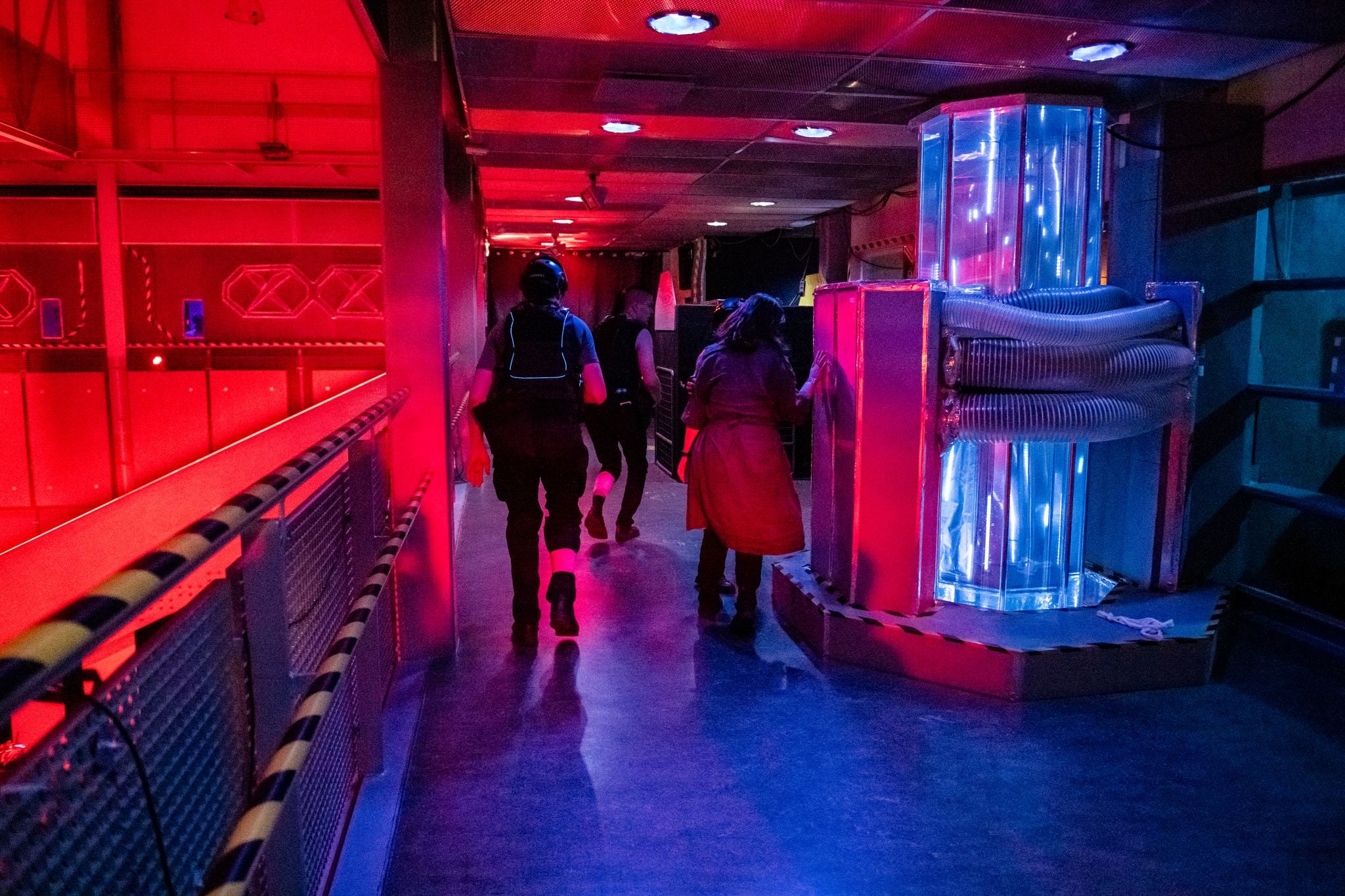
When players stepped aboard our ship in 2019 and 2024, they didn't enter a quiet corridor with props and imagination filling the gaps. They entered a living vessel - one that breathed, warned, groaned, broke and sang. Long before you were told there was danger, you heard it. Sound was not decoration - sound was the ship.
Every jump, alert, and split second decision made by the bridge was orchestrated through sound. Red alert claxons cut through ambient machinery hum. The jump engine wound itself into a rising frenzy. Warning announcements echoed through decks as the ship tore across space.
This wasn't cinematic background audio. It was diegetic - a sound that belonged to the world and reacted to it. When the ship took damage, the ambience changed. When life support faltered, the barely audible thrum that players relied on simply stopped. Often, the silence was more terrifying than noise.
Each area of the ship had its own sonic identity.
The Bridge spoke in system chirps, warnings and controlled urgency. Engineering was awash with sounds of heavy machinery and a gigantic star drive. Analysis machinery and measurements whispered in the science bay. The green room murmured with air scrubbers and the gurgling of water and nutrients serving botanical vats. In the hangar bay, the airlock sequence commanded attention, counting down seconds before opening to vacuum.
Blindfolded, you could still tell where you were.
Altogether 27 loudspeakers and 9 subwoofers were mapped around the ship, dividing it into distinct auditory zones. Subwoofers didn't just make noise - they made an impact. During the jump sequences players didn't just hear the engine, they felt it in their chest.
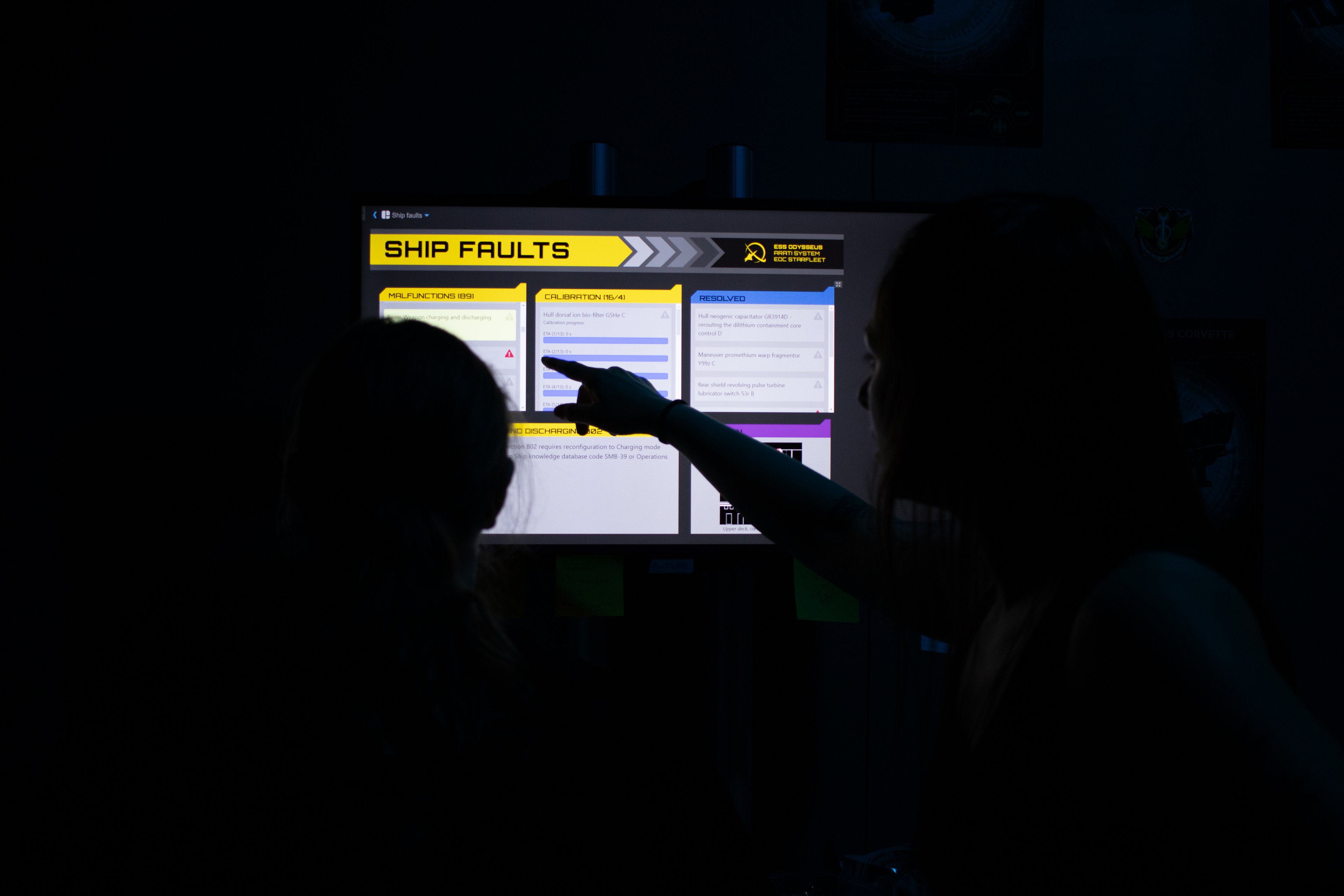
Behind the scenes Odysseus was driven by a fully automated, real-time ship simulation. The bridge simulation software Empty Epsilon translated battle conditions into ship events, while a persistent backend system tracked ship state, damage, engineering and plot events. Lighting and sound reacted immediately. Yellow alert meant a change in tone for players, Red alert giving new rhythm to officers and marines. Hull impacts translated the action to civilians, scientists and politicians. A blown fuse in damaged equipment could shut down entire systems - in worse cases blinding bridge displays in the middle of battle. Player choice shaped the audio environment constantly - often without them realizing it consciously.
Sound guided survival.
Picture: Lenne Eeronketo
Building the soundscape
When we started designing the sound of Odysseus, we made one rule early on: No background music pretending to be a spaceship.
If the ship was going to convey a feeling of reality, its sound had to behave like a real system. Reactive, local, fallible and deeply tied to player actions. What this meant in design was less about composing ambience and tracks, and more about engineering a living, distributed audio environment.
In most LARPs, sound is either global or symbolic. In Odysseus sound was spatial, state-driven and contextual. Each room had its own localized alerts and system noises, with a continuous ambient soundscape which reacted to damage in systems.
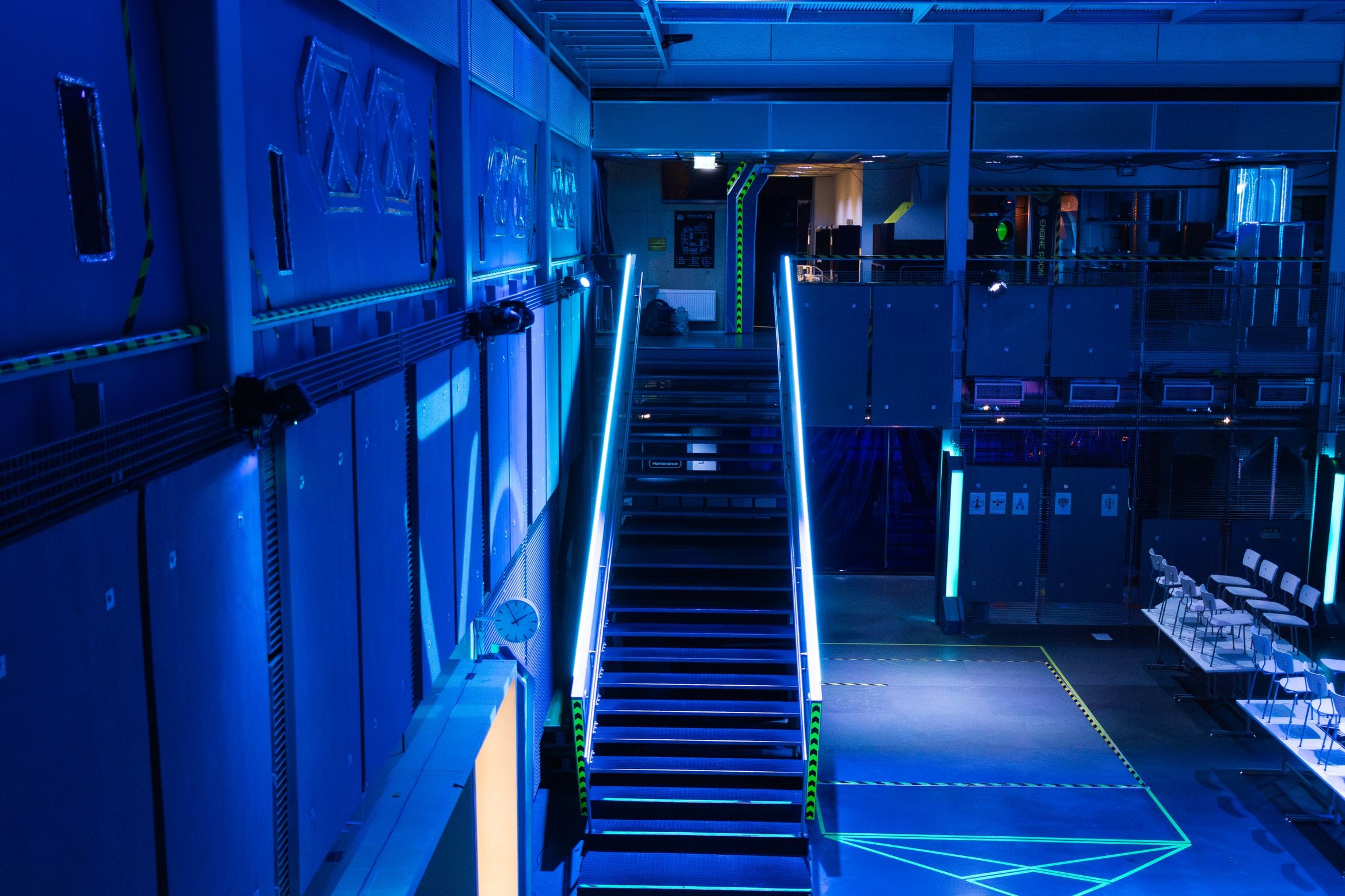
We mapped zones with 27 speakers. The goal wasn't about loudness - it was local truth. If something broke in an environment, you heard it first there. If engineers managed to make repairs, the ship audibly stabilized. Subwoofers played a critical role. During jump sequences, battles and major plot events sound wasn't just heard, it was a physical event transmitted through the floor and walls.
These decisions heavily influenced mixing, frequency choices, and even how repeated sounds were allowed to evolve over time to avoid fatigue.
Almost all sound aboard Odysseus was diegetic - originating from believable sources within the world of Odysseus. Machinery, systems, alerts, announcements, transmissions, hull impacts and failures were all originating from real events. Non-diegetic sound was used sparingly. A cinematic score at game start slowly gave everyone the opportunity to transition into the game and the slowly rising thematic music at the very end carried the experience to its final moments.
Picture: Lenne Eeronketo
The sound design was born from a mixture of theatre, music and systems engineering. Our team had experience from composing and performing music, audiobook and theatre production and IT systems integration and project management. We had to solve issues such as:
How do you tell a story without dialogue?
How can you build ambience without looping becoming noticeable?
What does tension sound like when nobody is speaking?
How do you synchronize multi-room audio reliably in real time?
How do you ensure consistency and recovery if something fails during live production?
How do you give game masters control without overloading them?
Very quickly the work stopped being about sound effects and became about system design.
The result was not just immersive, but operationally stable and robust enough to survive intense player interaction across days of gameplay.
Odysseus proved immersive audio transforms a LARP. It turns imagination into instinct. It replaces rules with reactions. It makes the impossible feel physically real. When systems failed, players reacted faster to sound than screens. When the ship stabilized, they relaxed before anyone told them it was safe.
With your support, we're taking everything we learned - systems, craftsmanship, integration, mistakes and breakthroughs - and pushing immersive audio from atmosphere into a core game mechanic.
Join us.
Live the experience.
Lastly so that you don't just have to imagine it, here is a small taste of the soundscape of Odysseus. This is a collection from the 2019 runs. The soundscape was further developed and refined for 2024 runs. While listening through headphones can’t fully replicate the experience of being on the ship, surrounded by powerful speakers and a complete audio-visual environment, it offers a glimpse of what it felt like.
There is also a full soundtrack created for 2024 runs of Odysseus by sound designer Hannu Sinervä that is available in Youtube and Soundcloud.
Header picture: Ami Koiranen