Special Effect Makeup and FX Prosthetics in Odysseus
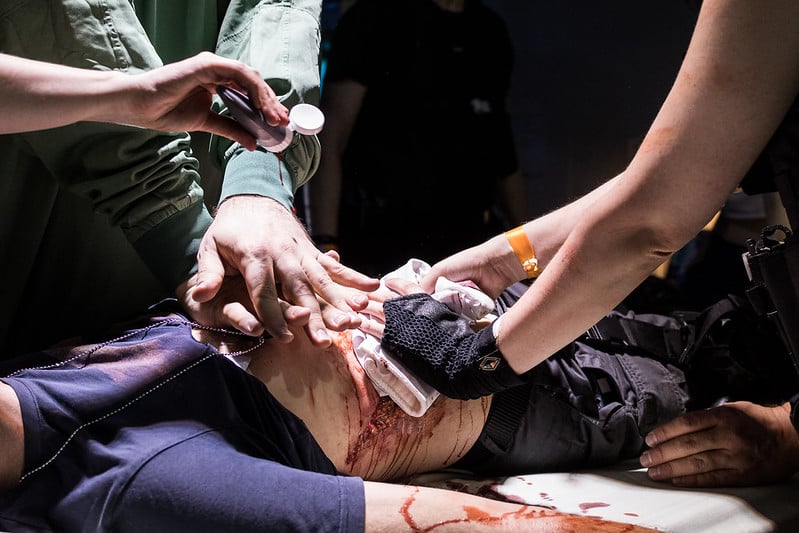
Hello all, I am Caito, I was in charge of our amazing special effect makeup team in past runs of Odysseus. We believe that special effect makeup and FX prosthetics can have a powerful impact on immersion during gameplay on Odysseus, especially when integrated thoughtfully into the surrounding events. At its best, it becomes a visual language for the story: wounds, scars, and bruises that communicate what has happened without anyone needing to pause the scene to explain it. In other words: show, don’t tell.
SFX Makeup becoming a part of the story
The whole process of how our SFX team came to be was rather organic. The name itself is slightly misleading as SFX is not a perfect description of practical makeup alone, but the volunteers involved were also helping with props and other small on-set illusions. The term simply stuck, and over time it became a convenient umbrella for everything we do currently.
It all started modestly. A few volunteers set up a small space where players could come to adjust their character’s appearance after events had unfolded in the game. A bruised captain after a tense negotiation, a soldier returning from a disastrous mission. The players could drop by and have their characters’ experiences reflected visually. Before long, however, we realized that a much greater impact could be achieved if we packed our tools and went “into the field.” Instead of waiting for the story to come to us, we started meeting it where it happened.
Over the runs, that approach evolved into a structured system. We still maintain a backstage workspace, but we also coordinate closely with other teams and GMs. Information about potential rivalries, missions, or dramatic events helps us prepare certain props in advance. In some cases, we may even contact players beforehand at location to ask about their preferred level of realism. At the same time, spontaneity is a huge part of our work and players are always welcome to come to us and request effects on the fly. We actually love these, to be completely honest!
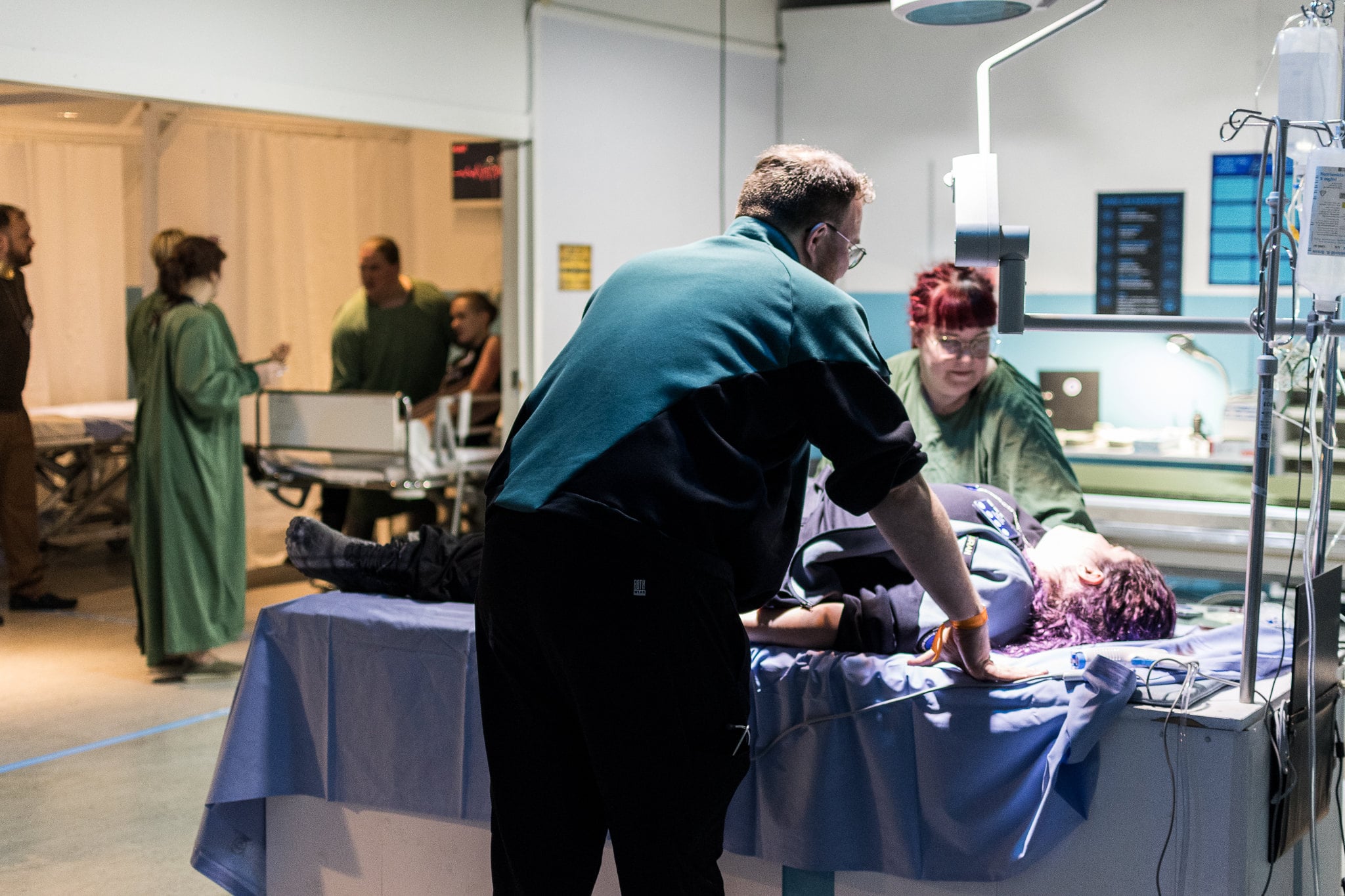
Picture: Viima Strengell
Preferred level of engagement
To keep things comfortable for everyone involved, we usually think of our effects in four levels.
Level 0 is the simplest: no effect at all. Your body, your decision. If someone prefers to act out injuries purely through performance, or simply doesn’t want makeup applied, we fully respect that. It may be about allergies, about not wanting the scene to be disturbed or about props or anything at all. We will not question your decision.
Level 1 represents symbolic damage. A quick mark, scratch, or small detail to indicate something has happened without committing to a long-lasting effect. This is often used when the injury will be healed quickly in the story, or when props, costumes, or skin sensitivities make more elaborate work impractical.
Level 2 aims for a bit more realism while keeping things slightly stylized. Many of our bullet wounds fall into this category: quick to apply, visually striking at first glance, but intentionally a little “theatrical” up close. These effects are perfect for fast-paced gameplay where medics will soon bandage everything up anyway.
Level 3 is our full-commitment approach. This is where we try to deliver maximum gore and detail for players who want to explore serious injury or extended medical play. These effects often become interactive elements with medics removing shrapnel, examining tissue layers, or performing dramatic “surgeries.” It’s messy, immersive, and for many players incredibly fun.
We do our best to brief players about these levels ahead of time, but we also check in during the moment whenever possible. Consent and comfort always come first.
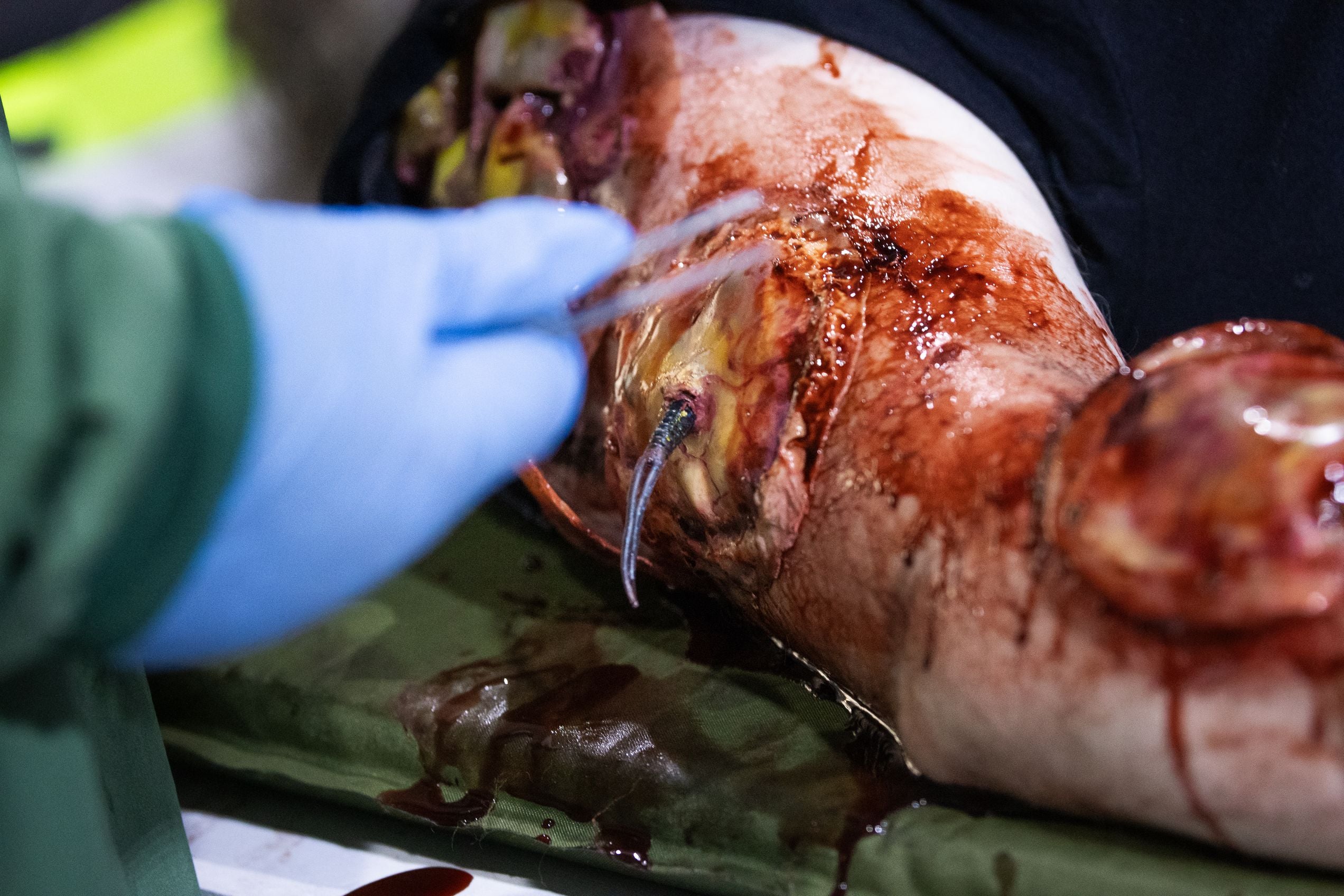
Picture: Lenne Eeronketo
Latex, Blood, and Clever Hacks
Technically speaking, most of our work is done with liquid latex, primarily using products from Grimas, a Netherlands-based professional makeup brand widely used in theatre and face painting. However, we also rely on a number of unconventional tricks; Oats, baking powder, and even certain hair products can become surprisingly effective tools in the right situations.
Blood, for example, turned into a fascinating challenge. The quantities used during game runs are quite large, and many commercial products unfortunately stain costumes and props, sometimes permanently. By combining the knowledge and past experiences of several team members, we eventually developed a formula that captures the right look and viscosity while being far gentler on players’ equipment. Nothing is ever completely risk-free, of course; use anything often enough and wear will appear. But occasionally even that becomes part of the story as some players seem to enjoy the battle scars on their gear almost as much as the ones on their characters! We have torn apart and drenched more than one pair of trousers and shirts by request..
One practical aspect of our workflow is that most prosthetics are created during the event itself or shortly before it, sometimes just a few days ahead of time. We do not typically pour molds of our scars or other wounds. Instead, we build pieces directly using filler materials such as peeled tissue paper layered with liquid latex.
This method has several advantages; It uses significantly less latex, which matters because our prosthetics are generally not reusable for hygiene reasons. It also allows us to modify pieces on the spot, keeping them lightweight and adaptable. Most importantly, freshly cured latex retains excellent grip and elasticity, meaning we need far less adhesive or skin glue. For players wearing these effects over longer periods, that translates to less irritation and also faster application during combat situations for our team.
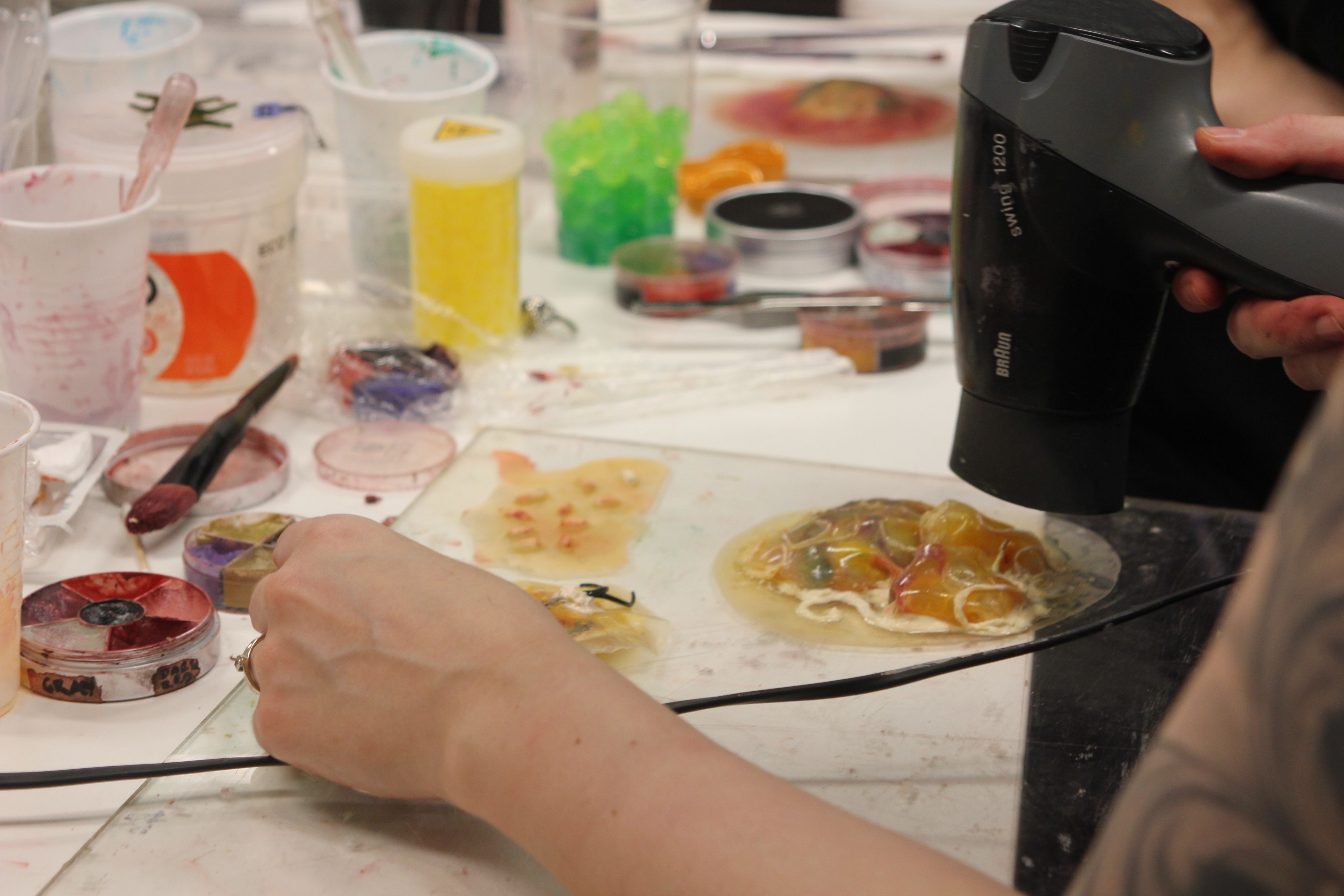
Picture: Sirian Holappa
Quiet medics of the makeup world
Our field work operates a bit like stagehands during a play: ideally invisible. The whole concept of “going into the field” is to be ready before events unfold. We keep an eye on the Game Masters’ command centre and the overall schedule, coordinate with documentation teams, and then head out with compact toolkits.
Transition spaces are often our staging areas with those brief moments between missions, the seconds before hangar bay doors open, or corridors players pass through on their way to somewhere like the Medbay or Science. Fast-paced battle events are especially intense. In those situations, we move through the chaos like quiet medics of the makeup world, using the “fog of war” to attach quick wounds or markings. Most of these effects fall in the Level 1–2 range and take only moments to apply.
Even then, we always try to ask first: does the player want damage effects, and if so, what kind and where? Whenever possible, we work from the sidelines. Sometimes we add blood flow or additional details while medics are already treating someone, blending into the crowd so the scene continues uninterrupted. The goal is always the same: support the narrative without stealing focus from it.
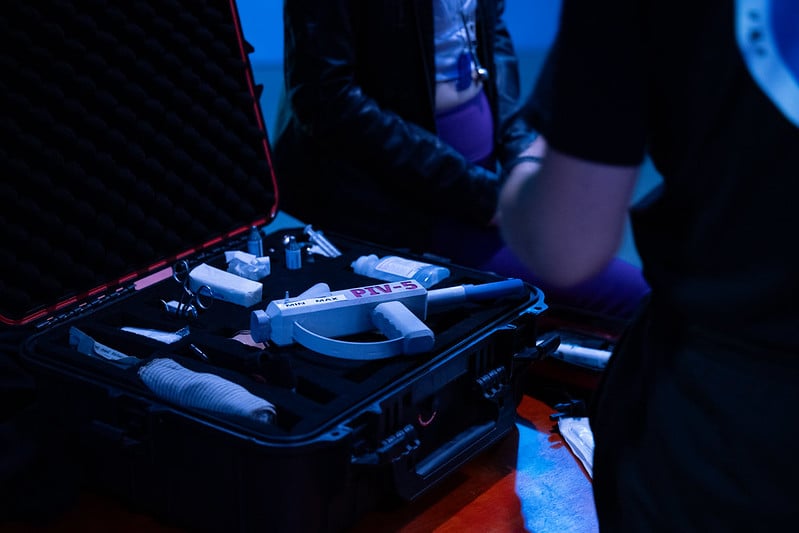
Picture: Tuomas Puikkonen
But why put this much effort into prosthetics and makeup in the first place?
Because larps, like Odysseus, are an extraordinary space to explore emotions and reactions safely. Visual effects act as tangible feedback in the game loop: actions lead to visible consequences. A character emerges from ‘a negotiation’ with a black eye; immediately the environment reacts. Questions are asked. Tensions rise. New scenes unfold. A single bruise can spark an entire storyline.
There is so much more that could be said about our SFX team, so many techniques, experiments, and lessons learned that we would love to share with the wider larp community. But perhaps the most important point, at least for me personally, is this: I deeply believe in the power of visuals to support immersion.
Sometimes that means elaborate prosthetic wounds. Sometimes it means a single symbolic mark. And sometimes the most powerful moment comes from nothing more than a player’s body language acting out pain. All of these approaches are valid. All of them can create memorable scenes.
But if, through my work, I can give a player that extra boost of confidence and the feeling that they look exactly like the character they want to portray in that moment, then I have done my job. If they walk back into the scene feeling like the main character of their own story or creating the impact they wished on all their co-players, then something special has happened.
And witnessing that moment, that spark of excitement when a scene truly lands, is what keeps me returning to this hobby.
So to everyone who has trusted us with their characters, their costumes, and sometimes a truly impressive amount of fake blood: Thank you.
And last but not least, you don’t have to imagine what all this would look like, here is a small taste of the amazing work of our SXF team in the past runs compiled by our videographer Valtteri Niskavaara.
Header picture: Viima Strengell
Video: Valtteri Niskavaara